
New Product Development Engineer
As a New Product Development Engineer at Clippard, I led 3 products through release and contributed to 2 more in internal development. All five were designed for customers in the biomedical industry, in high exposure environments like an infant ventilator and kidney dialysis systems.

01. NPV3 PANEL MOUNTED PINCH VALVE
Solving for User Friction in Pinch Valves
Development of the NPV3 Panel Mount Pinch Valve started after identifying that a significant number of customers were creating custom solutions to mount their valves to a panel. I was given the responsibility of designing what a one-size-fits-all, panel-mount-ready pinch valve should look like.
Rather than designing solely around the company purchasing the valve, we also focused on the people who would use it day to day. This led us to three key touchpoints across the valve's life that were critical to a good design: installation, maintenance, and use.
KEY FEATURES
Implementing features around these key touchpoints meant staying in close contact with the machinists who were creating my parts. With machinists and engineers in the same building, we could easily walk through tolerance and feature questions in person, which kept the design easy to use and make.
Starting 3D viewer…
02. NPV7 PANEL MOUNTED PINCH VALVE
Beta Unit Failure Analysis
I joined the NPV7 team after the product had already launched, during close collaboration with a customer building a custom valve for an at-home hemodialysis machine. When failures emerged during beta unit testing, it was up to me to understand why and implement a fix.

The bigger challenge was reproducing the failure. Our own testing hadn't turned up the same results the client was seeing, so we stayed in close contact with their engineering team, trading notes to narrow down where the discrepancy was coming from.
After months of back and forth, I reproduced the failure by designing fixtures and an electronic circuit that matched the customer's exact test setup and ruled out every other variable. Once the root cause was clear, a material change brought their failure rate to zero and let the next phase of development move forward.
03. OXYGEN MIXING BLENDER
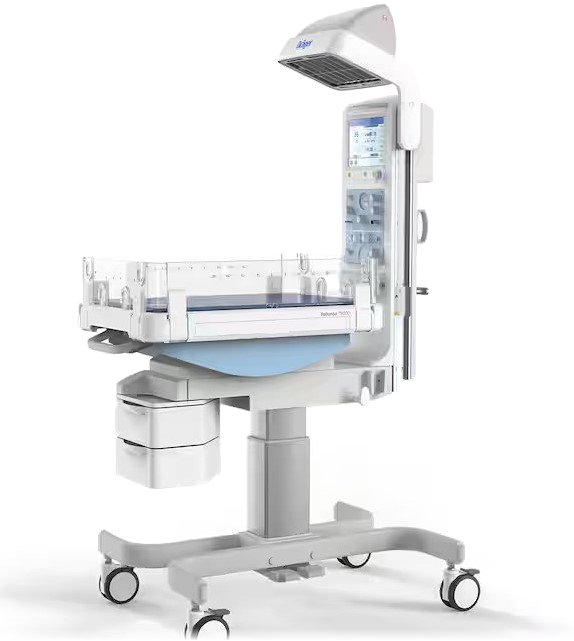
Oxygen Mixing Blender for Neonatal Ventilator
My final project at Clippard carried the tightest deadline: producing a functioning beta unit of an oxygen mixing blender for a neonatal ventilator. I had three months to deliver a unit that would pass their internal testing.
Competitive benchmarking helped me identify the most critical flow pathways and build those into the design. Each implementation was specific to our customer, which required new pathways within the manifold and manufacturing processes, including a higher surface quality than Clippard had ever needed before.
Reliability and precision were front of mind throughout. As with the NPV3 project, I worked closely with machinists to push the tolerances, making sure the end result was something that could be trusted for such a sensitive patient population.
Before the three months were up, I delivered the oxygen mixing blender, passing all relevant tests and paving the way for the next round of development.